GNCHR at the Workshop “Rights and Rurality: From Recognition to Action” in Brussels

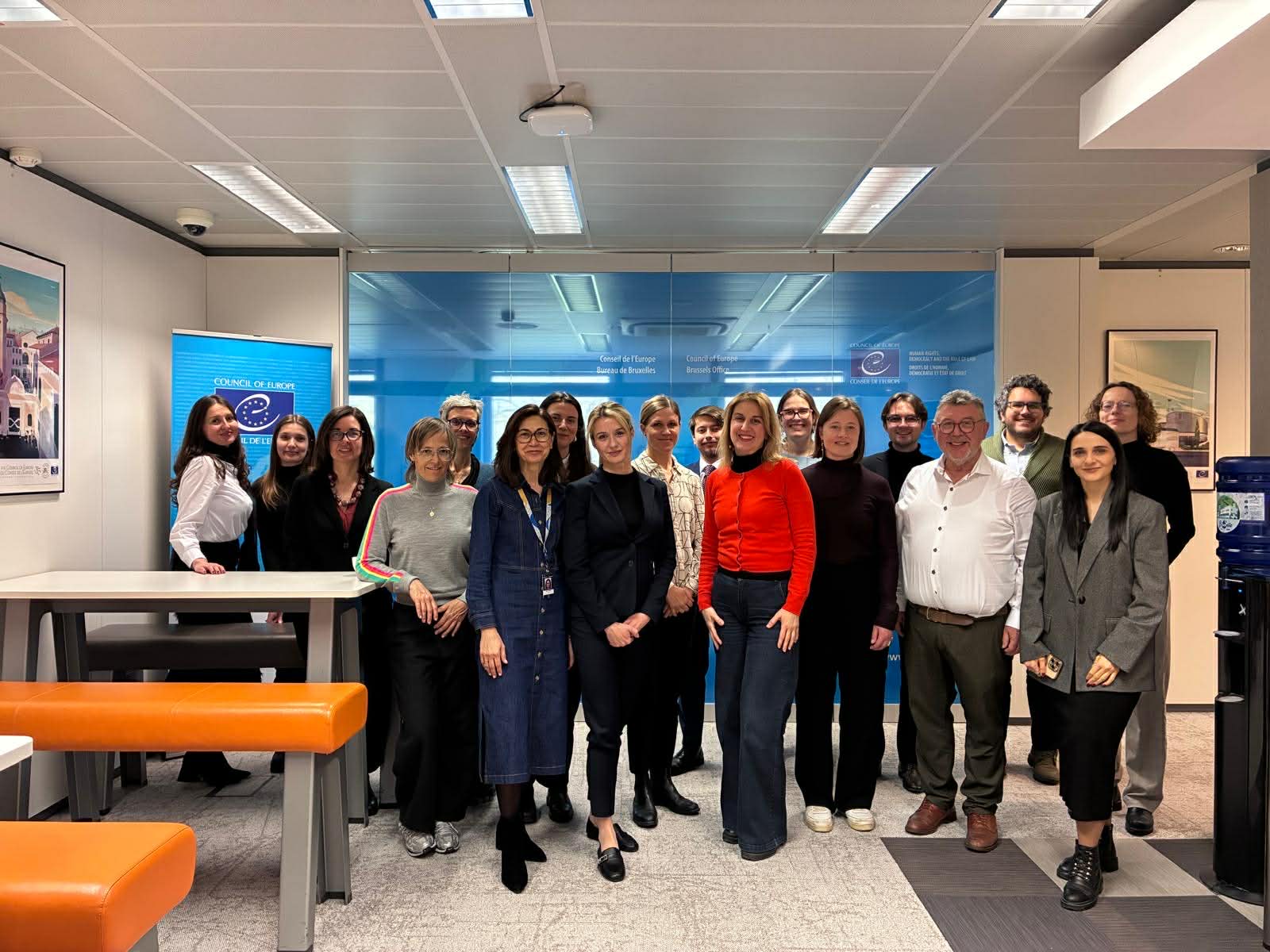
On Friday, March 27, the National Commission for Human Rights (GNCHR) participated in a workshop held at the Council of Europe Office in Brussels, titled “Rights and Rurality: from Recognition to Action.” The event took place within the framework of the COE-FRA-ENNHRI-EQUINET Collaborative Platform on Social and Economic Rights, which brings together ENNHRI, the Council of Europe, the EU Agency for Fundamental Rights, and the European Network of Equality Bodies (EQUINET).
The workshop followed the Platform’s 15th Meeting on October 2, 2025, in Edinburgh, which highlighted a persistent and systemic gap in the enjoyment of social and economic rights in rural and remote areas (see the relevant report here).
This in-person, one-day workshop was designed to strengthen dialogue among National Human Rights Institutions (NHRIs), Equality Bodies, and Civil Society Organizations. It focused on discussing the challenges faced by rural and remote areas, exchanging good practices, and reinforcing and promoting them to ensure the enjoyment of social rights in these regions, with the aim of moving from recognition to action.
National Human Rights Institutions, acting as a bridge between international standards and local realities, are called upon to leverage all available tools, including international legal instruments such as the European Social Charter and the Charter of Fundamental Rights, in monitoring the implementation of rights in regional and remote areas. They are also encouraged to carry out field visits and awareness-raising activities within local communities, promote participation in decision-making process, collect data and evidence, and issue targeted, coherent recommendations to the State competent authorities. Particular emphasis should be placed on ensuring access to healthcare, education, and infrastructure so that no one is left behind.
At the workshop, the GNCHR was represented by the legal officer Katerina Charokopou, in her capacity as Chair of the Working Group on Economic, Social and Cultural Rights of the European Network of National Human Rights Institutions (ENNHRI). She presented women’s entrepreneurship in rural Greece as a tool for strengthening and promoting socio-economic rights in local communities and increasing women’s active participation in the economy. She particularly emphasized the role and contribution of small private women-led businesses and women’s cooperatives.
She also presented the good practice of the Women’s Association of Roma Women of Drosero – ELPIDA, which constitutes a notable example of self-organization among Roma women in Greece and a successful model of social empowerment for a marginalized group in a marginalized area. She highlighted that such good practices contribute both to improving the human rights situation in local communities and to strengthening women’s socio-economic rights in themselves.